June 28, 2026
Bathroom Mold vs. Mildew: What's the Difference?

Bathrooms are warm, damp, and frequently exposed to moisture, making them common places for fungal growth. Dark spots on grout, discoloration near the ceiling, or a musty smell may indicate mildew, mold, or an underlying moisture problem.
Although the terms are often used interchangeably, mold and mildew do not always behave the same way. Knowing the difference can help you decide whether routine cleaning is enough or whether the bathroom needs a professional inspection.
What Is Mildew?
Mildew is a term commonly used to describe certain types of surface-level fungal growth. It often appears as a thin, flat, powdery, or slightly fuzzy coating.
Mildew may be:
- White
- Gray
- Yellow
- Light brown
It commonly develops on bathroom surfaces such as:
- Shower grout
- Tile
- Window sills
- Caulking
- Shower curtains
- Painted surfaces
- Areas around sinks and tubs
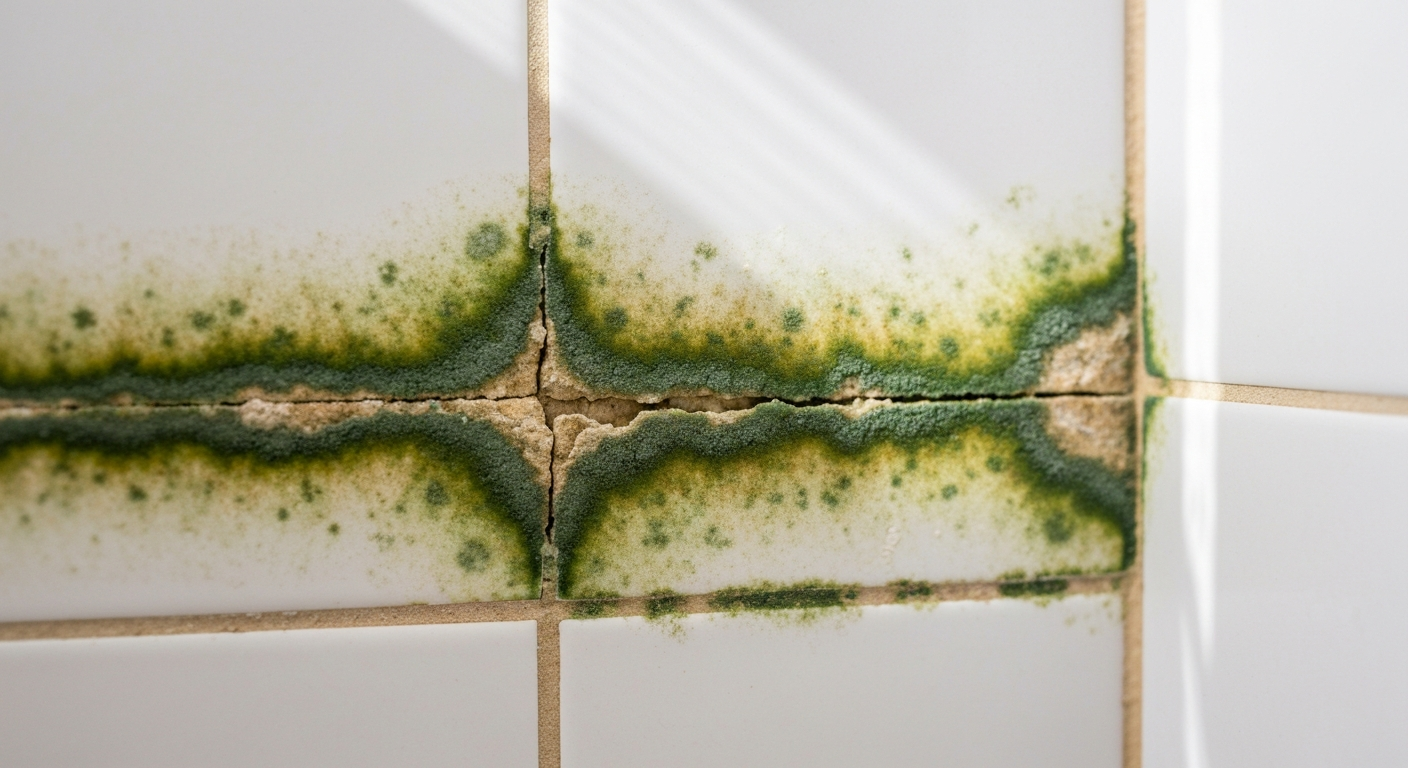
Because mildew usually remains on the surface, small areas may be easier to clean than growth that has spread into porous building materials.
However, recurring mildew often means the bathroom has an unresolved humidity, ventilation, or moisture problem.
What Is Mold?
Mold is a broader category of fungal growth that can appear in many colors and textures.
Depending on the species and surface, mold may look:
- Black
- Green
- Brown
- White
- Red
- Blue
- Fuzzy
- Slimy
- Spotted or irregular
Unlike surface mildew, mold may spread into porous materials such as:
- Drywall
- Wood trim
- Ceiling tiles
- Cabinet components
- Insulation
- Subflooring
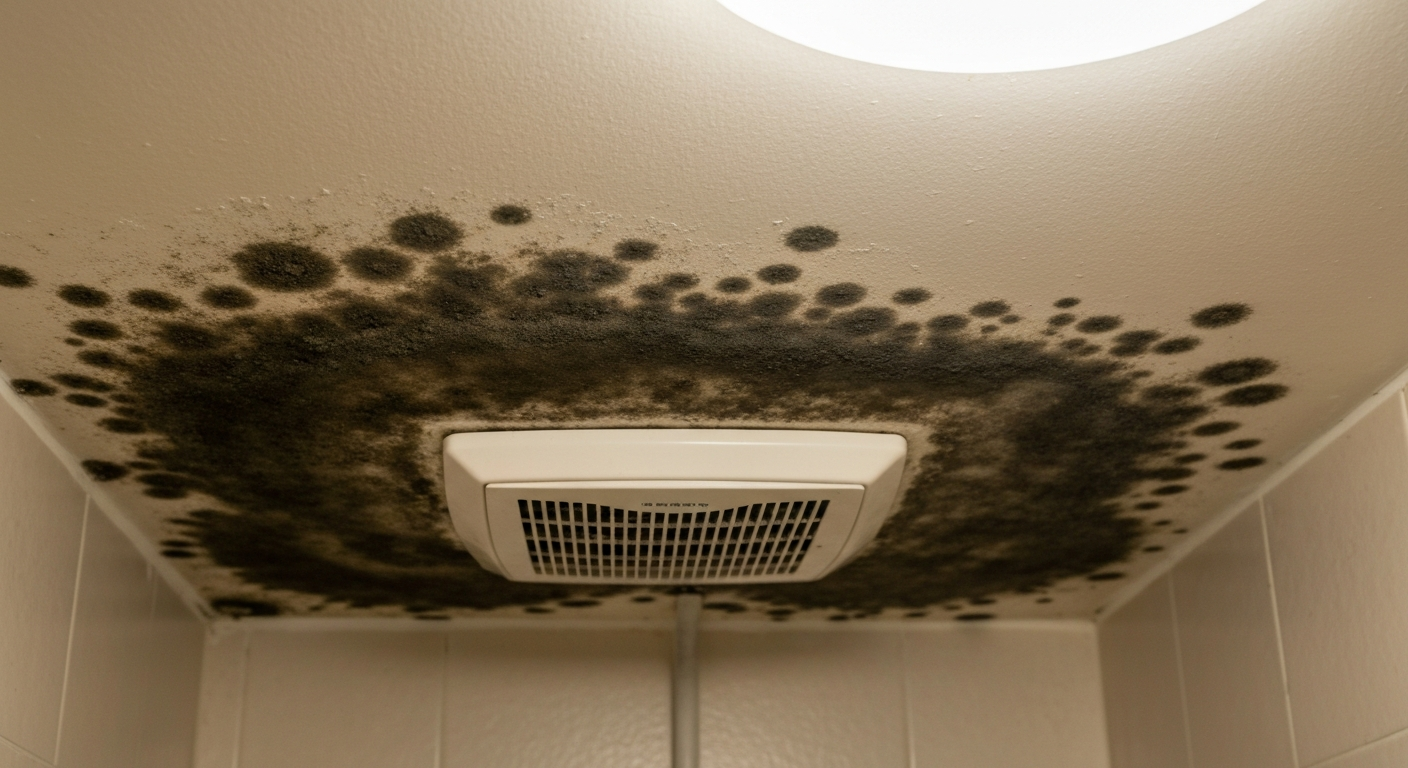
Growth on drywall, ceilings, or wood may indicate that moisture has moved beyond the bathroom’s visible surfaces.
Mold vs. Mildew: Key Differences
The easiest way to understand the difference is to consider appearance, location, and how deeply the growth may have spread.
Appearance
Mildew often looks flat, powdery, or lightly textured. Mold may appear thicker, fuzzy, slimy, or irregular.
Appearance alone is not always enough to identify fungal growth accurately. Dirt, soap residue, staining, and damaged caulk can sometimes look similar.
Color
Mildew is often white, gray, or yellow before becoming darker.
Mold can appear in a much wider range of colors, including black, green, brown, blue, red, or white.
Color does not reliably indicate how dangerous or extensive the growth is.
Location
Mildew is commonly found on exposed, damp surfaces such as tile, grout, and window sills.
Mold may grow both on surfaces and inside porous materials, including walls, ceilings, flooring, and cabinetry.
Depth
Mildew is often limited to the surface.
Mold may penetrate porous materials, making surface cleaning alone ineffective when the underlying material remains damp or contaminated.
Common Causes of Bathroom Fungal Growth
Mold and mildew are usually symptoms of excess moisture.
Common causes include:
- Poor ventilation
- Long, hot showers
- Plumbing leaks
- Failed caulking
- Roof leaks
- Condensation
- Wet towels or bathmats
- Water escaping from a shower enclosure
- Damp drywall or insulation
- A bathroom exhaust fan that vents improperly
Cleaning visible spots without addressing the source may allow the growth to return.
Warning Signs of a Hidden Moisture Problem
Visible spots are not the only sign of bathroom mold.
Watch for:
- A persistent musty odor
- Peeling or bubbling paint
- Soft drywall
- Stains on walls or ceilings
- Swollen baseboards
- Loose wallpaper
- Cracked or separating caulk
- Warped cabinets
- Growth that returns quickly after cleaning
- Discoloration outside the shower area
Dark spots spreading across the ceiling or appearing on walls away from the shower may indicate excess humidity, a plumbing leak, roof damage, or moisture inside the wall or ceiling cavity.
Can You Clean Mildew Yourself?
A small amount of surface growth on tile, grout, glass, or another nonporous material may sometimes be manageable with routine cleaning and proper ventilation.
Before cleaning:
- Wear gloves
- Ventilate the room
- Follow the cleaner manufacturer’s instructions
- Never mix cleaning chemicals
- Avoid splashing products onto skin or nearby materials
The surface should be dried thoroughly after cleaning.
If the growth returns, the priority should be finding the moisture source rather than repeatedly scrubbing the same area.
Why Mold on Porous Materials Is Different
Porous materials absorb water. When mold grows on drywall, wood, ceiling tiles, or insulation, it may extend beneath the visible surface.
Cleaning only the exposed area may leave contaminated or damp material behind.
Depending on the extent of the damage, affected materials may need to be:
- Inspected
- Dried
- Cleaned using specialized methods
- Removed and replaced
- Treated after the moisture source is repaired
Painting over mold or applying new caulk will not correct growth inside the material.
When to Call a Mold-Remediation Professional
Professional evaluation may be appropriate when:
- The affected area is large
- Growth keeps returning
- The problem is spreading
- Drywall, wood, or insulation is involved
- There is a strong musty odor
- The source of the moisture is unknown
- The bathroom recently experienced flooding or a major leak
- Growth is visible inside vents or HVAC components
- The ceiling or wall feels soft or damaged
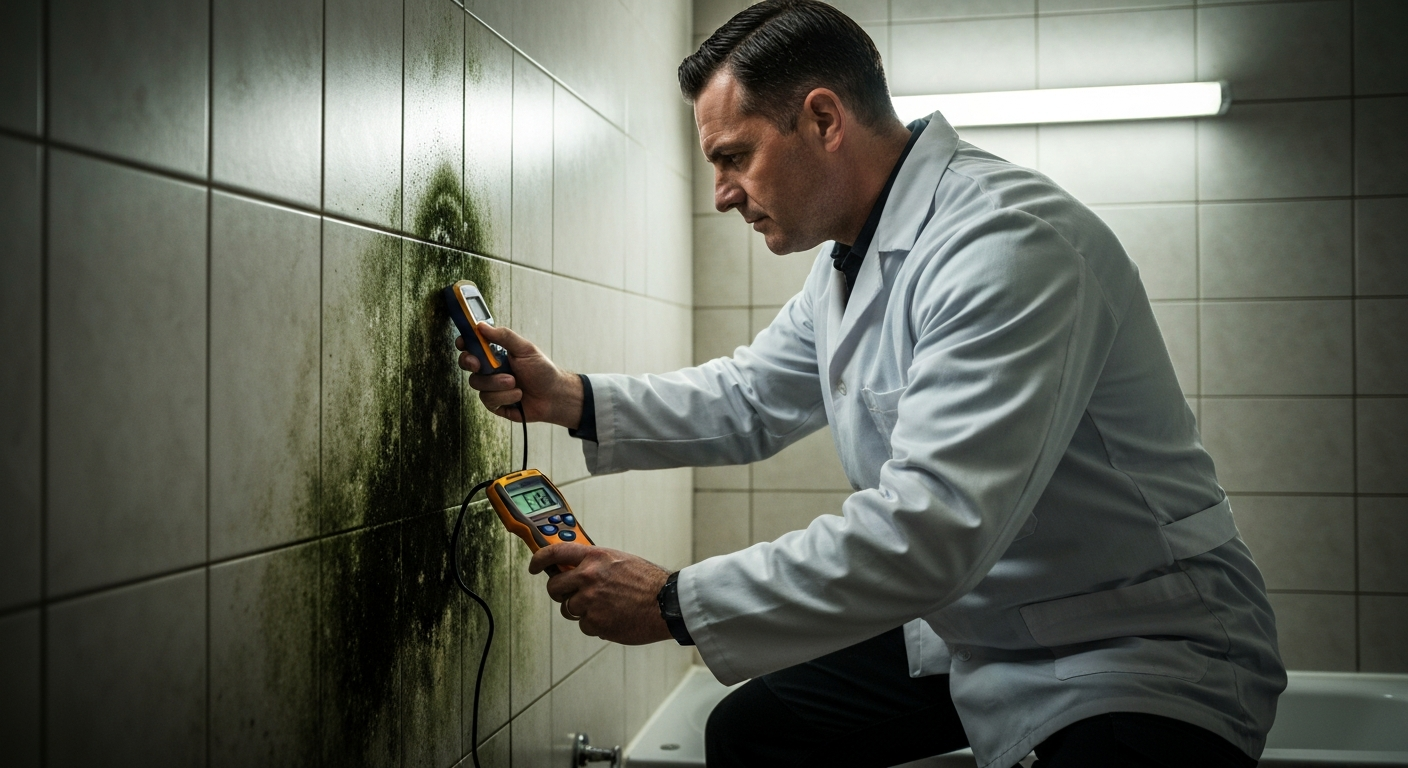
Avoid cutting into walls, sanding surfaces, or disturbing a large area of suspected mold. These actions may spread contaminated dust and debris into other parts of the home.
How Professional Remediation Works
The exact process depends on the source and extent of the problem, but mold remediation may include:
- Inspecting the bathroom and surrounding areas
- Locating the source of the moisture
- Measuring moisture in walls, ceilings, or flooring
- Containing the affected area
- Removing materials that cannot be restored
- Cleaning salvageable surfaces
- Drying the structure
- Repairing or replacing damaged materials
A lasting solution requires both mold cleanup and moisture control.
How to Prevent Mold and Mildew in the Bathroom
The most effective prevention strategy is to keep surfaces dry and control indoor humidity.
Helpful steps include:
- Run the exhaust fan during showers
- Leave the fan running afterward
- Open the bathroom door when appropriate
- Wipe down wet shower walls
- Hang towels and bathmats to dry
- Repair plumbing leaks promptly
- Replace damaged caulk
- Clean grout regularly
- Check walls and ceilings for stains
- Make sure the exhaust fan vents outdoors
- Use a dehumidifier when necessary
An exhaust fan that is undersized, clogged, or vented into the attic may not remove moisture effectively.
Mold or Mildew? Do Not Ignore Recurring Growth
Mildew is often a surface-level problem, while mold may spread into drywall, wood, insulation, and other porous materials. However, appearance alone does not always reveal how serious the issue is.
Small surface spots may respond to cleaning, but recurring growth, damaged building materials, and persistent odors suggest that moisture is still present.
A professional inspection can help identify the source, determine how far the damage has spread, and recommend the appropriate cleanup and repair process.
Need Help with Mold?
Contact us today for a professional inspection and honest advice about your property in Macon.
Call +1 629-284-4946